
Define pharmaceutical
API, also known as active pharmaceutical ingredient, is the core substance for drugs to exert the pharmacological effects.
API pharmaceutical is a key element of the pharmaceutical industry, connecting the chemical industry and pharmaceutical intermediates with its unique position, as well as the huge global preparation market.
According to Precedence Research data, the global API market size will grow at a compound annual growth rate of 6.1% from 2023 to 2032. It is expected that in the next 10 years, the global API market size will grow steadily, and the integration of API + formulation will become a major trend. Our company has been recognized by the market with its cost advantages and quality control. The product has passed GMP certification, EDQM certification, and US FDA certification.
Here are some progestogen APIs on our website: Pregnenolone, Progesterone, etc. There are also popular weight loss drug ingredients: Semaglutide and Tirzepatide. And others, for more information, please check here.
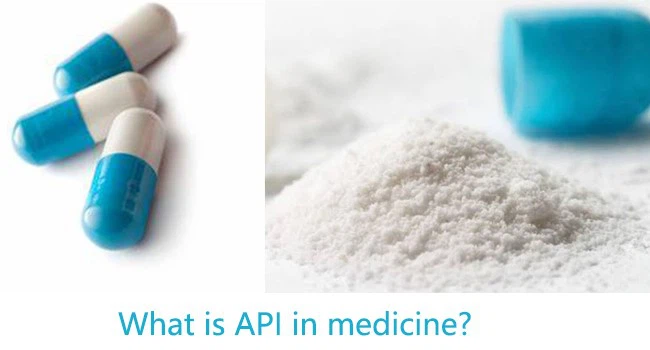
However, APIs cannot be used directly and need to be further processed into preparations by adding excipients and other steps. In this process, intermediates play an important role. They are semi-finished products produced in the API process steps and need to be further refined to obtain APIs.
APIs can be roughly divided into three categories: bulk APIs, specialty APIs, and patented APIs. Bulk APIs include vitamins and antibiotics. Specialty APIs are mainly supplied to generic drug companies. They are usually off-patent products that are difficult to develop, such as drugs for chronic diseases, central nervous system drugs. Patented APIs, as products that are still within the patent period, mainly serve original drug companies.
With the aging of the global population and the expiration of patents for original drugs, the market size of APIs is expected to grow steadily. In the last century, Europe and the United States were the main production bases for APIs, but with practical problems such as production costs and environmental protection, API production has gradually shifted to the Asia-Pacific region. China has become the world's largest producer and exporter of APIs. According to Clarivate data, China can produce about 1,650 varieties of APIs, accounting for about 30% of the world's production capacity.