
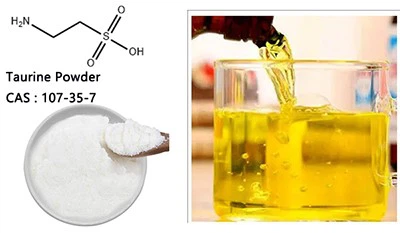
Taurine is an amino acid derivative that is generated during the metabolism of sulfur-containing amino acids. In the body, it is mainly synthesized in the liver with the participation of vitamin B6. There are more than 1,000 health products with taurine added in the European and American markets.
Taurine supplements are available in capsule or powder form.
What food is rich in taurine?
Taurine is found naturally in various meats and dairy products. It is also found in cow's milk-based infant formulas and may be added as a supplement to non-dairy-based infant formulas.
According to the U.S. Food and Drug Administration (FDA), a nutritionally balanced diet provides 9-400 mg of taurine per day. It is estimated that a lacto-ovo vegetarian consumes about 17 mg per day, while many vegetarian diets are completely deficient in this important amino acid.
While it is often found in sports drinks and supplements, there are also many natural sources of this important amino acid.
The following are some sources of taurine:
Meat and poultry: 11 to 306 mg/100 g wet weight.
Seafood: 11 to 827 mg/100 g wet weight.
Dairy products: 2 to 8 mg/100 mL.
Breast milk and infant formula - 4 to 7 mg per 100 mL.
What does taurine do to the body?
It has a wide range of biological functions such as anti-inflammatory, analgesic, maintaining the body's osmotic pressure balance, maintaining normal visual function, regulating cell calcium balance, enhancing cell membrane antioxidant capacity, lowering blood sugar, regulating nerve conduction, increasing heart contractility, improving the body's immune capacity, and protecting myocardial cells.
Why do they put taurine in energy drinks?
Taurine is mainly used in the fields of food additives and medicine, of which the amount used for food additives accounts for more than 90% of the total demand.
In Western countries, sports drinks, dairy products, energy drinks, etc. are all application areas of taurine. A certain amount of taurine is added to infant formula to facilitate the healthy growth of children, which was legislated by the United States and Japan a few years ago.
In European and American countries, sports drinks have become the second largest beverage variety after traditional carbonated drinks.
l-taurine is often added to functional drinks, and it has long become one of the most important additives in sports drinks.
Reference
1. Duman, J.G., Y.-K. Tu, and K.F. Tolias, Emerging roles of BAI adhesion-GPCRs in synapse development and plasticity. Neural plasticity, 2015.
2. Stephenson, J.R., R.H. Purcell, and R.A. Hall, The BAI subfamily of adhesion GPCRs: synaptic regulation and beyond. Trends in pharmacological sciences, 2019. 35(4): p. 208-215.