

Product Introduction
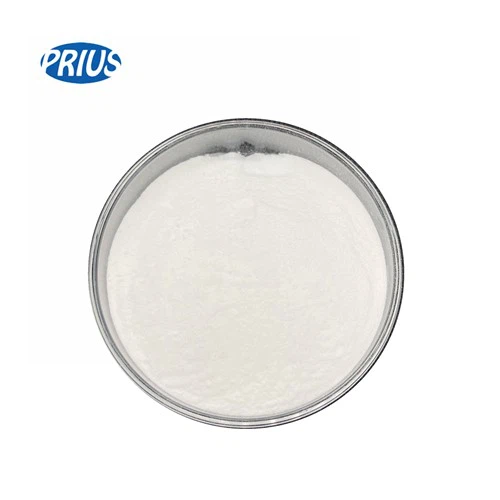
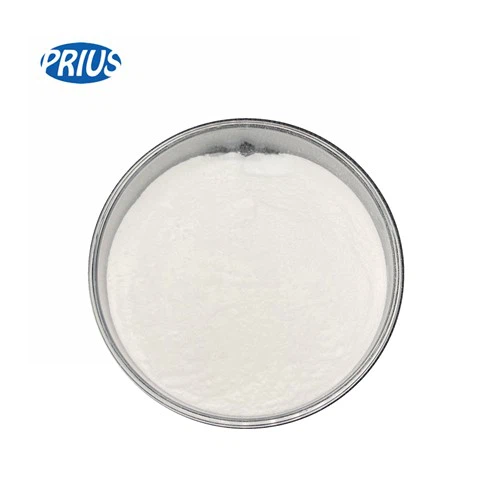
Vitamin A Palmitate, also known as Retinol Palmitate, is one of the most stable and essential vitamin A ester derivatives. Pure vitamin A is chemically unstable and easily oxidized and deteriorated, so most commercial vitamin A products exist in esterified forms. Compared with Vitamin A Acetate, Vitamin A Palmitate features stronger stability, lower moisture sensitivity and longer shelf life, making it the preferred grade for pharmaceuticals, high-end cosmetics and health products.
Our factory supplies a full range of customized specifications including powder and oil forms, covering feed grade, cosmetic grade and pharmaceutical grade. We also support customized production and provide matching Vitamin A Acetate series products to meet diversified industrial processing needs. The product adopts advanced enzymatic synthesis technology, with fewer by-products, low energy consumption and environmental-friendly production process, far superior to traditional chemical synthesis.
Complete Product Specifications
We provide full-series multi-unit customized products to adapt to feed, cosmetic, pharmaceutical and health care industries:
100,000 IU/g (≈55% Content): Feed grade, mainly used as animal nutrition feed additive
170,000 IU/g (≈97% Content): High-purity cosmetic & pharmaceutical grade, for medical raw materials and skincare formulations
Powder Form: 250,000 IU/g, 500,000 IU/g
Oil Form: 170,000 IU/g, 1,000,000 IU/g
Custom Service: Support all special customized specifications according to customer requirements
Production Process Comparison
Vitamin A Palmitate has two mainstream production processes. We prioritizegreen enzymatic biosynthesis to ensure high product purity and low impurity content:
Traditional Chemical Synthesis: Mature but complicated process, requiring high temperature and high pressure with high equipment requirements. It features multiple side reactions, difficult product separation, high energy consumption and serious environmental pollution, with unstable product purity.
Advanced Enzymatic Biosynthesis (Our Process): Simplified production flow, few by-products, low energy consumption and zero pollution. The finished product has stable activity, high all-trans isomer content and fewer residual impurities, meeting international pharmaceutical and cosmetic grade standards.
Vitamin A palmitate, also known as retinol palmitate, is one of the most important vitamin A esters.
There are several specifications:
★ 100,000 units (content about 55%), mainly used as feed additives.
★ 170,000 units (content about 97%), used for cosmetics and pharmaceutical ingredient.
★ 500,000 IU/g, 250,000 IU/g powder form.
★ 1000000 IU/g, 170000 IU/g oil form.
★ Or other specifications.
In addition, it is also an important pharmaceutical intermediate and can be used to manufacture drugs.
Due to the instability of vitamin A, most vitamin A products on the market appear in the form of its esters.
Other vitamin A ester derivatives including vitamin A acetate and vitamin A palmitate are also available.
Vitamin A acetate is susceptible to moisture absorption, while vitamin A palmitate is more stable than vitamin A acetate.


The synthesis of vitamin A palmitate is mainly divided into two categories: chemical synthesis and biosynthesis. The chemical synthesis process is mature, but complex, requires high temperature and high pressure, has high requirements for equipment, has many side reactions, is difficult to separate products, has high energy consumption, and causes great environmental pollution.
The enzyme synthesis process is simple, has few by-products, low energy consumption, and is environmentally friendly.
Liquid chromatogram:

Strict Quality Standard & COA Test Report
All products comply with EP, USP, FCC, ICH and national food safety standards, with complete microbial and heavy metal detection, safe and reliable for medicine, cosmetics and food processing.

|
ITEMS |
STANDARDS |
METHOD |
|
|
Appearance |
A light yellow solid or yellow oily liquid |
EP/FCC/GB 29943 |
|
|
Identification(TLC) |
Conforms |
EP/USP/FCC/GB 29943 |
|
|
Related substances |
A300/A326: NMT 0.60 A350/A326: NMT 0.54 A370/A326: NMT 0.14 |
EP/GB 29943 |
|
|
Assay |
Expressed as international units |
NLT 1,700,000IU/g |
EP/USP/GB 29943 |
|
Expressed as equivaled amount of retinol |
NLT 510mg/g |
EP/USP/GB 29943 |
|
|
Acid value |
NMT 2.0mg/g |
EP/GB 29943 |
|
|
Peroxide Value |
NMT 10meq/kg |
EP/GB 29943 |
|
|
Chroma |
NMT 3.0 |
ASTM D1500 |
|
|
Retinol |
NMT 1.0% |
EP/In house |
|
|
All trans-isomer content |
NLT 95.0% |
In house |
|
|
Residual solvent |
Conform to ICH |
EP/USP/ICH |
|
|
Heavy Metal |
NMT 5mg/kg |
ChP |
|
|
Arsenic |
NMT 1mg/kg |
GB 5009.76 |
|
|
Lead |
NMT 2mg/kg |
GB 5009.12 |
|
|
Total Plate Count |
NMT 1000cfu/g |
GB 4789.2 |
|
|
Yeast & Mold |
NMT 100cfu/g |
GB 4789.15 |
|
|
Coliforms |
NMT 3.0MPN/g |
GB 4789.3 |
|
|
E. Coli |
NMT 10cfu/g |
GB 4789.38 |
|
|
Salmonella |
Negative/25g |
GB 4789.4 |
|
|
Staphylococcus aureus |
Negative/25g |
GB 4789.10 |
|
Core Functions & Efficacy
Vitamin A Palmitate is a high-activity functional raw material with dual medicinal and cosmetic values, featuring stable activity and diverse effects:
1. Ocular Health & Dry Eye Treatment (Pharmaceutical Grade)
It can be prepared into professional eye gel products as an artificial tear substitute, specially used for improving insufficient tear secretion and relieving dry eye syndrome. With high viscosity, it forms a protective lubricating film on the eye surface to reduce friction. It effectively improves corneal epithelial dehydration, repairs eye mucosal damage, and maintains normal human visual function for long-term eye protection.
2. Anti-Keratinization & Skin Repair
Easily absorbed by human skin, it inhibits abnormal skin keratinization, thickens epidermal and dermal tissue, repairs fragile skin barriers, improves rough and dull skin texture, and makes skin delicate and smooth.
3. Anti-Aging & Elasticity Enhancement
Stimulates the proliferation and regeneration of collagen and elastin in the skin, enhances skin elasticity, reduces fine lines and wrinkles, accelerates skin metabolism and renewal, and delays skin aging.
4. Hair Nourishing & Maintenance
Nourishes scalp and hair follicles, improves dry and frizzy hair, repairs damaged hair scales, enhances hair toughness, and is widely used in high-end hair care formulas.
Wide Application Fields
1. Pharmaceutical Industry
As a core pharmaceutical intermediate and API, it is used in the production of eye health medicines, dry eye treatment gels, vitamin A supplement tablets and capsules, meeting clinical medical standards.
2. Health Supplement Industry
Applied in functional dietary supplements, used for human vitamin A supplementation, visual function maintenance and body nutritional regulation.
3. Cosmetic & Personal Care Industry
Added into eye cream, face cream, essence, lotion and other anti-aging skincare products for anti-wrinkle, repairing and brightening effects. Also widely used in shampoo and conditioner to nourish and repair hair.
4. Animal Feed Industry
Low-specification products are used as high-efficiency feed additives to supplement vitamin A for livestock and poultry, promote animal growth and improve breeding benefits.
Product Advantages
High Stability & Low Activity Loss: More stable than Vitamin A Acetate, moisture-proof and oxidation-resistant, not easy to deteriorate, suitable for long-term storage and formula processing.
Green Enzymatic Process: Adopt advanced biosynthesis technology, low energy consumption, no environmental pollution, few impurities, high all-trans isomer content and stable product activity.
Full Specification Coverage: Complete powder and oil specifications, covering feed, cosmetic and pharmaceutical grades, supporting one-stop customized services.
International Standard Compliance: Fully compliant with EP/USP/FCC/ICH international standards, strict microbial and heavy metal control, safe for medicine, food and cosmetics.
Complete Supporting Products: Synchronous supply of Vitamin A Acetate and other vitamin series derivatives to meet diverse purchasing needs.



Packaging & Storage
Standard Packaging: Vacuum sealed packaging for powder products; professional sealed packaging for oil products; outer standard export drum, customized packaging available.
Storage Conditions: Store in cool, dry and dark environment, sealed and moisture-proof, avoid high temperature and strong light to prevent oxidation and activity attenuation.
Shelf Life: 24 months under standardized storage conditions.


FAQ
Q1: Can I get free samples?
A: Yes, we can provide free Vitamin A Palmitate samples, customers only need to bear the freight cost.
Q2: What payment methods are supported?
A: We will send a proforma invoice with bank details after order confirmation. We support T/T, Western Union, Paypal and Alibaba Escrow payment methods.
Q3: How to confirm product quality before bulk order?
A: You can test our free samples first. We can also customize products strictly according to your specifications and industry standards.
Q4: What is your MOQ?
A: Standard MOQ is 1kg. Small trial order of 100g is acceptable with full sample payment.
Q5: What is your delivery time?
A: 3-5 working days after payment confirmation, excluding Chinese official holidays.
Q6: Is there a bulk discount?
A: Yes, we provide tiered discounts. Larger order quantity enjoys more favorable wholesale price.
Hot Tags: vitamin a palmitate, China vitamin a palmitate manufacturers, suppliers, factory, Folic acid tablets, VD3 CAS 67-97-0, Vitamin E CAS 2074-53-5, vitamin b complex powder bulk, Folate supplement, b complex powder