
5-Deazaflavin, also known as 5-deazaflavin, an NAD⁺-like component, has been used in biochemical and biophysical studies.
Due to its anti-aging and life-extending potential, it has been called the "secret to longevity". It works through the activation of NAD⁺.
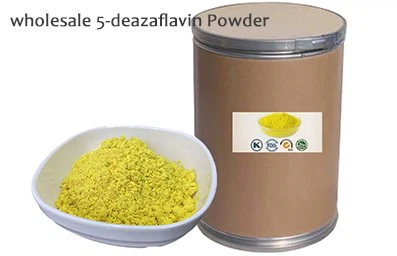
What is deazaflavin used for ?
1. Deazaflavin can be used as a tool to study the mechanisms of flavoproteinases. Since deazaflavin is structurally similar to flavin mononucleotide (FMN) and flavin adenine dinucleotide (FAD), it can bind to flavoproteins.
2. In structural biology, deazaflavin can be used to study the binding sites and conformational changes of flavoproteinases through techniques such as X-ray crystallography and nuclear magnetic resonance (NMR) spectroscopy.
3. Due to its unique redox properties, deazaflavin can be used to probe the redox reactions of flavin-dependent enzymes. It helps to understand the electron transfer process and the formation of reaction intermediates.
4. Activity of oxidoreductases
Deazaflavin can promote the necessary "redox" reactions of cells. Since oxidoreductases themselves are inactive, they require the coenzyme NAD⁺ to provide activation.
As we age, the content of NAD⁺ decreases, and deazaflavin can increase the content of NAD⁺, which has the effect of delaying aging.
5. Deazaflavin analogs can be used as inhibitors or regulators of flavin proteases. By studying how these analogs interact with enzymes, researchers can design more effective inhibitors for medical applications.
Compared with natural flavins, deazaflavin has unique photochemical properties. It can be used in studies involving light-induced electron transfer processes and the role of flavins in photoreceptor proteins.