
Vitamin K, also known as coagulation vitamin, is a type of vitamin with phylloquinone biological activity. It was first discovered and extracted from animal liver and sesame oil by Danish chemist Dam in 1929. Vitamin K includes several forms such as K1, K2, K3, and K4. Among them, K1 and K2 are naturally present and belong to fat-soluble vitamins, while K3 and K4 are artificially synthesized and are water-soluble vitamins.
Vitamin K is an indispensable substance for the liver to synthesize prothrombin. Its function is to promote the conversion of prothrombin precursor into prothrombin. When it is deficient, it will cause hypoprothrombinemia and coagulation disorders.
What is vitamin K1 good for?
Vitamin K1 powder, also known as phytomenadione powder, phylloquinone, and phylloquinone, has a chemical name of 2-methyl-3-phytol-1,4-naphthoquinone. It is a polycyclic aromatic ketone and a fat-soluble vitamin. It is stable to air and moisture, but will be decomposed in sunlight. It is widely present in natural green plants. Vitamin K1 is also present in breast milk, with a content of about 0-20ng/ml. Vitamin K1 is also generally added to milk powder on the market.
Vitamin K2 is a fat-soluble vitamin, also known as natural vitamin K, including multiple subtypes such as MK-4 to MK-13. Its main function is to promote the absorption and utilization of calcium, thereby maintaining bone health and preventing osteoporosis.
Which is better for you vitamin K1 or K2?
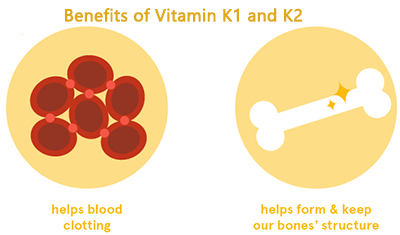
Vitamin K1 (phylloquinone) is found mainly in leafy green vegetables such as spinach, kale and broccoli. It is mainly involved in blood clotting, preventing excessive bleeding by activating proteins required for the clotting process.
Vitamin K1 is absorbed in the intestines and quickly used by the liver to support blood clotting.
Therefore, vitamin K1 is more effective for blood clotting.
Vitamin K2 (menadione) is found in fermented foods (such as natto), animal products (such as cheese and egg yolks), and is synthesized by intestinal bacteria.
Vitamin K2 plays a key role in calcium metabolism. It activates and regulates calcium deposition proteins, directing calcium to bones and teeth, helping to maintain bone density and reduce the risk of fractures. It also prevents it from being deposited in arteries and soft tissues.
Vitamin K2 is more bioavailable and more evenly distributed in tissues, including bones and blood vessels.
Therefore, vitamin K2 is more beneficial for bone health and cardiovascular health.
Reference
[1] Kaneki M, et al. Japanese fermented soybean food as the major determinant of the large geographic difference in circulating levels of vitamin K2: possible implications for hip-fracture risk. Nutrition. 2001 Jul-Aug;17(7-8):315-21.
[2] Sim M, Strydom A, Blekkenhorst LC, Bondonno NP, McCormick R, Lim WH, Zhu K, Byrnes E, Hodgson JM, Lewis JR, Prince RL. Dietary Vitamin K1 intake is associated with lower long-term fracture-related hospitalization risk: the Perth longitudinal study of ageing women. Food Funct. 2022 Oct 17;13(20):10642-10650.