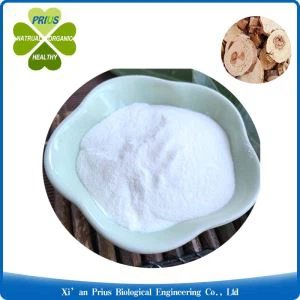


Propolis is a sticky solid gel formed by mixing plant resins collected by bees with their mandibular glands, wax glands and other secretions. Propolis is a mixture of plant compounds and bee secretions. Raw propolis is mainly composed of 50% resin, 5% pollen, 30% wax, 10% essential oil, and 5% various organic compounds (such as flavonoids, phenolic acids, esters , diterpenes, sesquiterpenes, lignans, aromatic aldehydes, alcohols) and amino acids, fatty acids, vitamins and minerals. Propolis has been used as a traditional folk medicine to treat a variety of diseases, and the polyphenols, flavonoids, and caffeic acid in propolis extract have been reported to improve metabolic syndrome. Propolis can also be used as an antibacterial agent to protect larvae and honey from external microorganisms.
COA
|
Item |
Specification |
Result |
Test Method |
|
Total flavonoids |
≥20 % |
22.40% |
UV |
|
Available Propolis content |
≥96 % |
98.00% |
Ethanol distilling |
|
Loss on Drying |
≤5.0 % |
1.6% |
5g/105℃/3hr |
|
Ash |
≤5.0 % |
0.4% |
5g/800℃/3hr |
|
Appearance |
Black chunk with glossiness |
conforms |
Visual |
|
Odor & Taste |
With a Characteristic Bee Propolis Odor |
conforms |
Organoleptic |
|
Total Heavy Metal |
≤2 ppm |
Conforms |
Auto absorb method |
|
Lead |
≤1 ppm |
0.89ppm |
Auto absorb method |
|
Chloramphenicol |
≤0.3 PPB |
Conforms |
Elisa |
|
Pesticide Residue |
Negative |
Negative |
GC |
|
Total Plate Count |
≤1,000 cfu/g |
Conforms |
GB T 4789.2-2016 |
|
Total Yeast & Mold |
≤50 cfu/g |
Conforms |
GB T 4789.15-2016 |
|
Escherichia Coli |
Negative |
Negative |
GB T 4789.3-2016 |
|
Salmonella spp |
Negative |
Negative |
GB T 4789.4-2016 |

1. Propolis extract has been found to improve diabetic complications by lowering glucose and blood lipid levels.
A research paper published in the journal Nature Communications titled: A propolis-derived small molecule ameliorates metabolic syndrome in obese mice by targeting the CREB/CRTC2 transcriptional complex.
This research has made important progress in the research of CREB/CRTC2 protein-protein interaction inhibitors, a new target for diabetes. It was first verified that artepillin C, the main component of Brazilian propolis, can inhibit CREB/CRTC2 protein-protein interaction. It was verified that the natural product artepillin C blocks CREB/CRTC2 protein-protein interaction and regulates gluconeogenesis-related genes by binding to CREB. expression, thereby exerting the therapeutic effect of reducing fasting blood glucose.
2. Professor Gregory from Texas was the first to conduct modern clinical research on the effect of propolis on wound healing. He compared the effectiveness of propolis cream and silver sulfadiazine (SSD) in patients with minor second-degree burns. Propolis has been shown to be more effective than SSD at reducing inflammation and promoting healing. Some time later, scientists tested propolis, honey, and the healing of infected wounds in diabetic patients, demonstrating in a clinical study of a randomized controlled trial that over a four-week period of observation of the healing process of diabetic foot ulcers, 5 doses applied twice daily % propolis ointment has a beneficial effect on wound size. Furthermore, wound fluid from the group treated with propolis showed lower bacterial counts.
Reference
[1]. Oxidative Medicine and Cellular Longevity: "Honey, Propolis, and Royal Jelly: A Comprehensive Review of Their Biological Actions and Health Benefits."
[2]. Samadi N., Mozaffari-Khosravi H., Rahmanian M., Askarishahi M. Effects of bee propolis supplementation on glycemic control, lipid profile and insulin resistance indices in patients with type 2 diabetes: A randomized, double-blind clinical trial. J. Integr. Med. 2017;15:124–134. doi: 10.1016/S2095-4964(17)60315-7.


Hot Tags: propolis extract, China propolis extract manufacturers, suppliers, factory, C-Xyloside, Puri-Xylane, Illicium verum Extract, Cordyceps Ext, Tripeptide-1, Wild Sea Buckthorn Fruit Powder